
Organizing a trip with artificial intelligence no longer sounds like an experiment or an office trick. Today, more and more travelers are using AI to plan itineraries, compare destinations, translate messages, or even hunt for cheap flights. The promise is enticing: in a few seconds a tool can do the work that previously required multiple browser tabs open, hours of searching, and a healthy dose of patience.
Still, it’s wise to view these new assistants with some perspective. Not all AIs respond the same, nor are they useful for the same tasks, nor do they err in the same way. Some tools stand out for organizing ideas, others for accessing up-to-date sources, and some for their ability to structure complex trips. The problem is that when it’s time to move from inspiration to reality, they all share the same limit: they can help you organize, but they don’t take on traveling for you.
ChatGPT and Gemini in Everyday Life
ChatGPT tends to be the most versatile option to get a trip started. It works especially well when what you need is a first draft of an itinerary, neighborhood recommendations, day-by-day routes, or quick translations to get by in another language. Its main strength lies in the conversation, as it allows fine-tuning responses to tailor the trip to each profile.
Gemini, for its part, scores points when the trip is tied to the Google ecosystem. Its integration with Gmail, Maps, or Calendar can be particularly useful for organizing bookings, locating addresses, or managing schedules. For those who already use these tools daily, it becomes a very practical assistant.
That said, both share a significant weakness. They can help you decide what to visit, where to stay, or how to get around a city, but they depend on information being current. If schedules change, hotel rooms run out, or an attraction temporarily closes, recommendations can become outdated if not checked against recent information.
Claude and Perplexity in the Technical Side

Claude tends to stand out when the trip is more complex than it seems. It is especially useful for summarizing long documents, reorganizing itineraries with multiple destinations, or working with information that requires a certain level of detail. Its ability to maintain coherence across lengthy texts proves very helpful when planning gets tricky.
Perplexity plays a different game. Its strength lies in verification. Thanks to its access to sources and the ability to consult links directly, it is very useful for checking entry requirements, visas, regulations, or any information that can change frequently.
This does not mean one tool is better than another. They simply respond to different needs. Claude helps structure the trip more effectively, and Perplexity allows better cross-checking of information before making decisions. However, even when using several tools at once, there is still a part of the planning that remains out of reach of any artificial intelligence.
What All AIs Leave Out
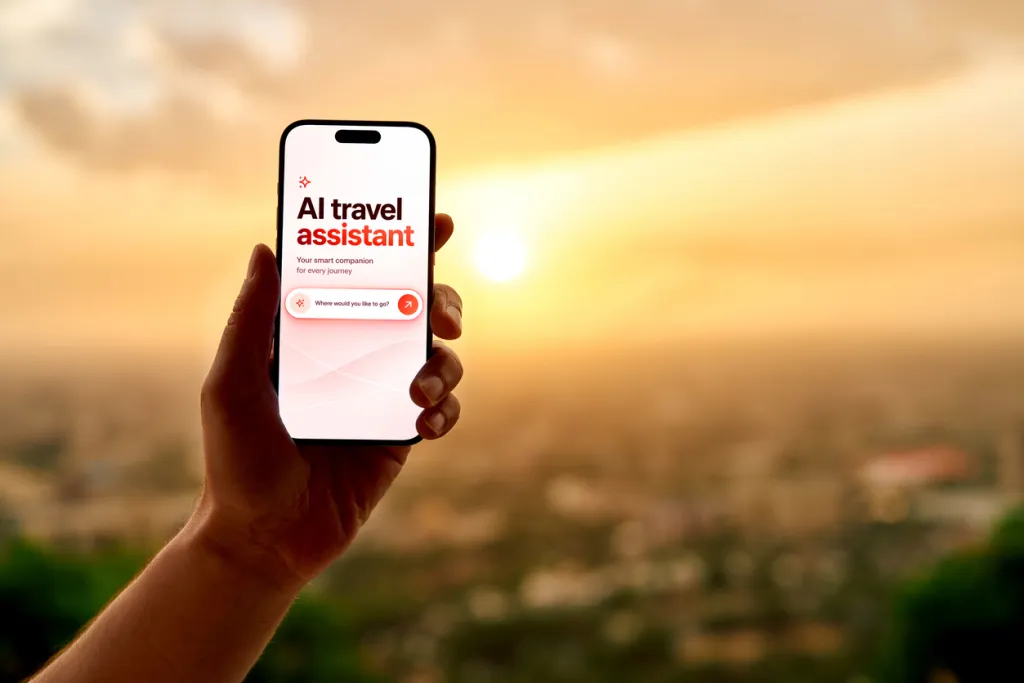
Here’s the real common limit. AI can tell you the weather, which neighborhoods deserve a visit, which restaurants have the best ratings, or how to make the most of three days in Tokyo, Rome, or Bangkok. They can also help you translate conversations or reorganize an itinerary on the fly. But none of them takes the tough calls for you or assumes the less visible part of the journey.
There is one aspect that AI tools tend to leave out of the conversation: handling the unforeseen. A chatbot can help design a perfect route through Japan or find the best time to visit a European city, but it cannot take charge of a last-minute cancellation, a lost piece of luggage, or a medical emergency during the trip.
That is why, in addition to using AI to organize itineraries, more and more experts recommend paying attention to basics such as health coverage, cancellation terms, or on-site assistance. Specialized companies like AXA offer travel insurances designed to handle these kinds of situations, which still depend on prior planning beyond any technological tool.
Artificial intelligence can help you travel better informed, save time and make quicker decisions. What it still cannot do is replace common sense or protect you when the trip shifts from planning on paper to a real experience.
How to Use AI Safely

The most sensible way to integrate AI into a trip is to treat it as a quick assistant, not as an absolute truth. It helps to start, compare options and save time, but the final step remains human. Checking dates, reviewing cancellation policies, confirming schedules, or verifying health requirements continues to be essential.
In practice, the best use of artificial intelligence to organize a trip combines several tools. ChatGPT can structure, Gemini can help coordinate bookings, Claude can develop complex itineraries, and Perplexity can verify key information. Together they handle the most comfortable part of planning very well.
What none of them do, none of them, is take responsibility when an imprevisión arises. And that remains an essential part of any trip, no matter how smart the technology we use to organize it.