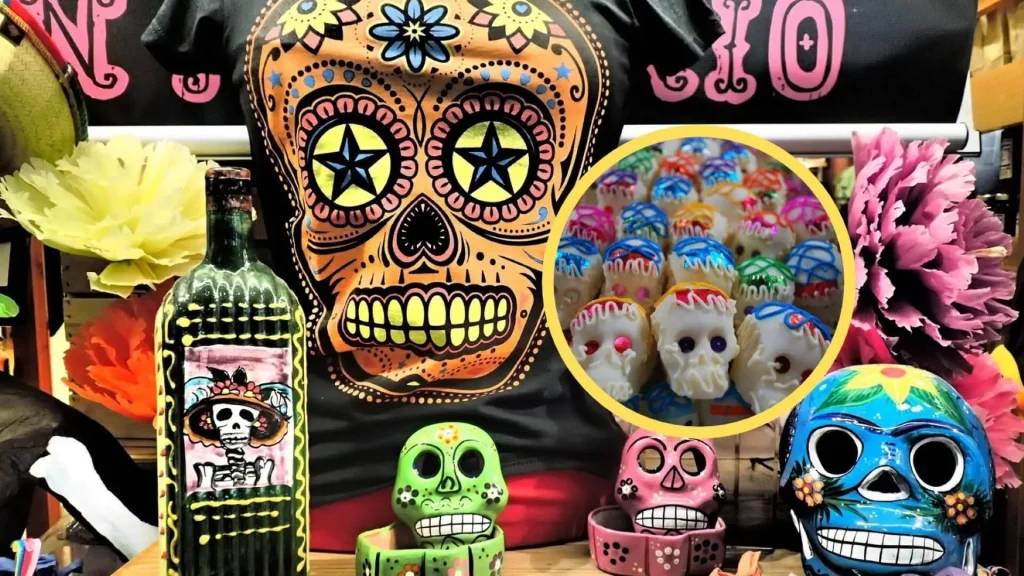
Are Mexican sugar skulls as pre-Hispanic as you might believe? This confection embodies the meeting of two worlds, the European and the American.
The skulls are crafted from alfeñique, a sugar paste. The term derives from the Arabic al-fānīd (“the sugar”), which arrived in Mexico from Spain.
Although the Aztecs already displayed human skulls on altars (the tzompantli), the meaning of that practice was very different from that of today’s skulls.
According to a study, the data indicate that the contemporary Día de Muertos is largely a colonial creation, based on European ingredients.
Nevertheless, the humanized form of these confections connects Spanish traditions with Indigenous ones.
Sources
-
Brandes, Stanley. “Iconography in Mexico’s Day of the Dead: Origins and meaning.” Ethnohistory (1998): 181-218. DOI: https://doi.org/10.2307/483058
-
Brandes, S. (2006). Skulls to the Living, Bread to the Dead: The Day of the Dead in Mexico and Beyond. Blackwell Publishing (ISBN 978-1-4051-5247-1).