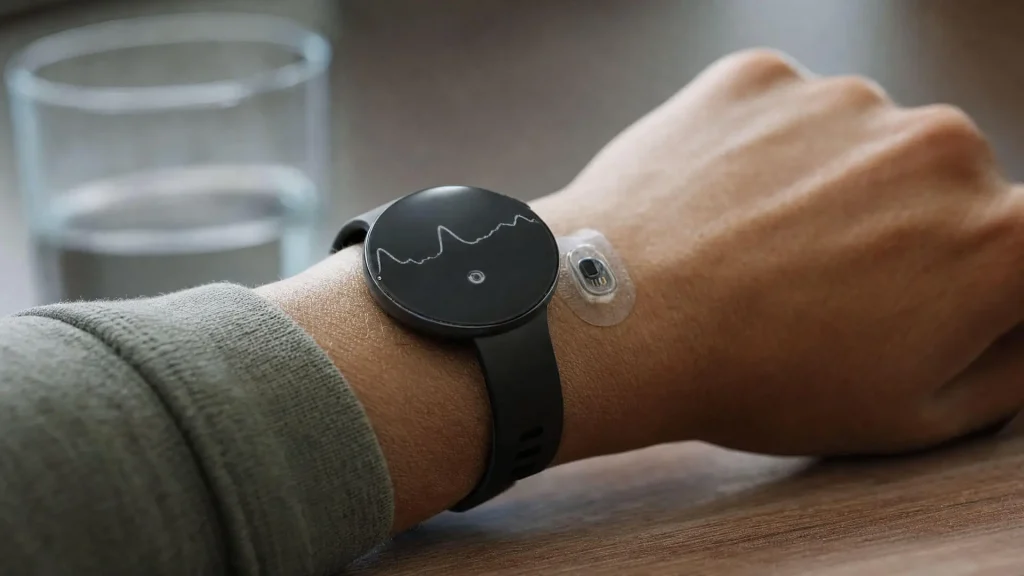
The headline is irresistible: a tiny, low-cost glucose chip, developed by a Cambridge team, capable of turning your watch into a clinical laboratory. The idea of painless glucose measurement has been pursued for years. But a careful reading of the study reveals a significant gap between what has been demonstrated and what the headline implies. Let’s examine it.
What they actually built in Cambridge
What the team presented isn’t a finished medical watch, but a miniaturized optical spectrometer. That word deserves clarification: a spectrometer is an instrument that splits light into its component wavelengths, just as a prism does with a ray of sunlight, to analyze what substances reflected or absorbed it. Each compound leaves a kind of fingerprint in that spectrum.
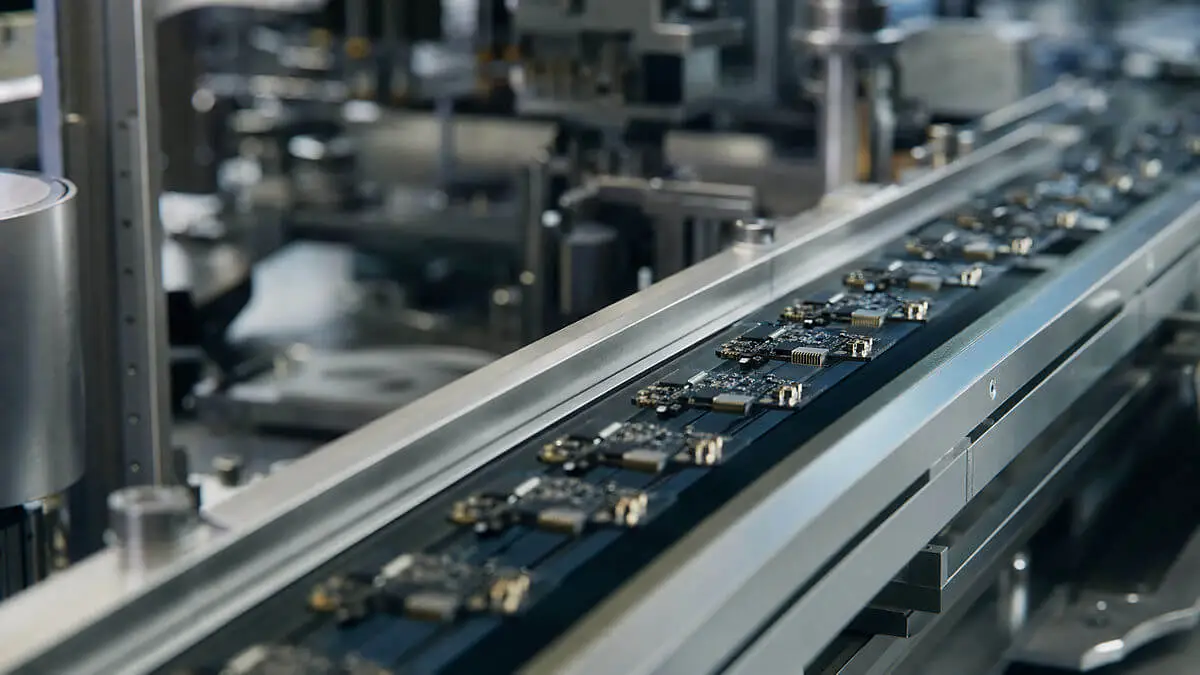
The technical novelty lies in size and cost. The packaged system measures 4.8 × 6.2 × 0.6 centimeters, weighs 16.5 grams and, according to its authors, could be mass-produced at low cost. Until now, spectrometers capable of this kind of analysis were bulky laboratory devices. Reducing them to a glucose chip manufactured in series is, in itself, the engineering achievement that underpins the research.
The chip does not measure glucose: estimation
Here is the nuance the headline tends to omit. The device does not analyze a blood sample nor directly measure sugar concentration. What it does is illuminate the skin and analyze the light it reflects. From the variations in that reflected spectrum, a computational model tries to estimate how glucose changes in the tissue: essentially, an optical glucose sensor, not a direct analyzer.
The difference between measuring and estimating is not a minor technical detail. A conventional glucose meter, with a drop of blood, directly quantifies the substance. This chip infers a value from indirect signals that also depend on skin tone and hydration, temperature, or how the sensor is placed. Hence it needs a model to translate those optical signals into a glucose figure, and that is where the limits appear.
A controlled test with 27 participants and a long-term follow-up on a single subject
The study actually includes two very different scenarios that should not be mixed. In the first, the team conducted an oral glucose tolerance test with 27 participants. This is a routine clinical procedure: the person ingests a known amount of sugar and their glucose is monitored over the following hours. Under these controlled conditions, the device achieved an average absolute error of 0.363 mmol/L, a figure that places the estimates reasonably close to reference values.
The second scenario is the one most reminiscent of the headline’s promise, and also the most fragile. The multi-day monitoring under everyday conditions was tested on a single person, and with a model trained specifically for that person. Do not confuse these results: the 0.363 mmol/L error corresponds to the group of 27 under clinical supervision with a single-point test, whereas the continuous multi-day monitoring is, statistically, a one-off case, without the robustness of a population sample or the ability to verify whether the same performance would repeat in another person. In other words: the system was personalized for a specific user and worked for that user. That shows the idea of non-invasive glucose is plausible, but not that it would work, as-is, for anyone who wears the sensor.
The obstacle the authors themselves acknowledge
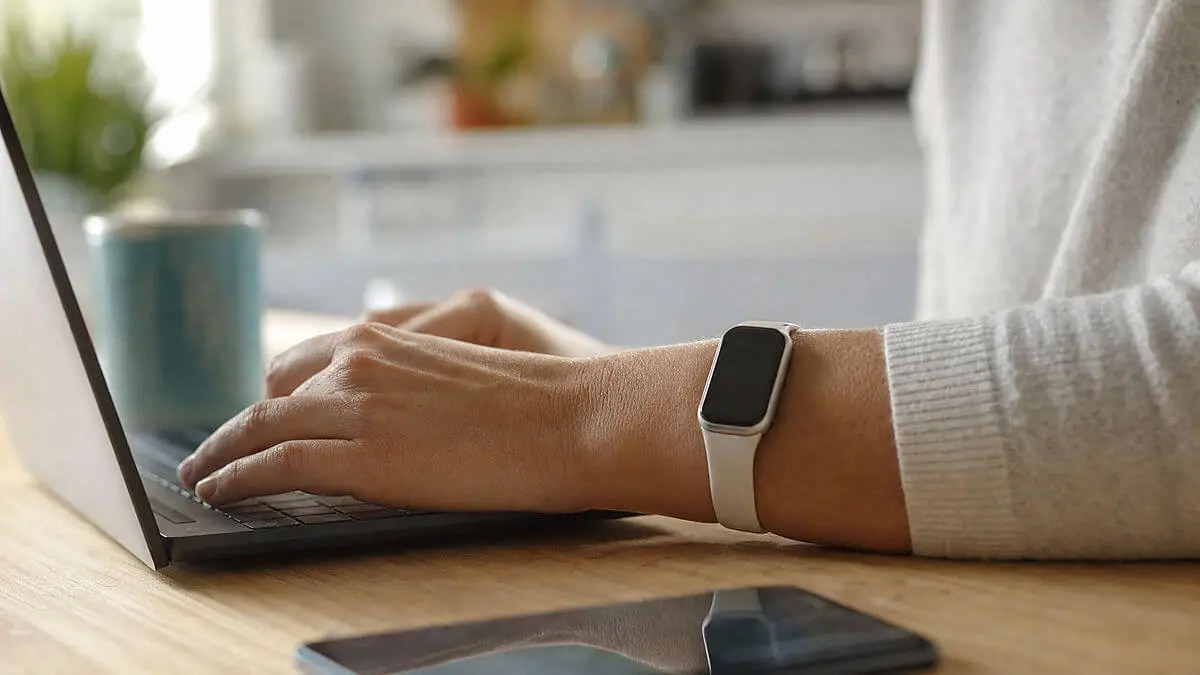
The team is explicit on a decisive point: the glucose model does not transfer reliably to other people. A model tuned for one individual does not generalize well to new users without recalibration. This means that the big remaining challenge is not so much the chip, which already functions as an optical instrument, but building a robust algorithm that estimates glucose in diverse populations without requiring individual calibration for each person.
This is a known barrier in the field of non-invasive glucose measurement. Several previous attempts have stumbled precisely here: what seems precise in the lab or on a subject collapses when faced with real-world variability of many people, in motion, with different skin tones and over days. That a system works in a demonstration does not mean it can be used to make medical decisions.
And the cost of the chip?
The cost figure also deserves careful reading. The low cost estimated by the authors corresponds to the sistema described in the study, designed for mass production, not the price of a full consumer smartwatch that could be bought in a store. A consumer product includes many other components — battery, display, connectivity, housing, certifications — and, above all, a long process of clinical validation and regulatory approval before one can claim that it measures something for health purposes.
In other words: the chip’s low cost is one of the reasons the research looks promising, because it opens the door to affordable sensors on a large scale. But one should not read it as meaning that a clinically reliable medical watch will be available soon at that price.
What it means and what remains open
This work offers concrete advances, but also leaves open questions. What is shown is that it is possible to build a very small, light, and potentially cheap optical spectrometer capable of capturing useful chemical signals through the skin. In a controlled test with 27 people, those signals allowed estimating glucose changes with a moderate error.
What has not yet been demonstrated is that this system measures glucose reliably in daily life and in different people without individual calibration. The continuous monitoring was validated in a single user, a result that cannot be extrapolated to the entire set of participants in the clinical trial, and the authors themselves note that the model does not generalize well. This does not mean the technology is a mirage; it means we are looking at a proof of concept, not a clinically approved device or a replacement for current measurement methods.
The open question for research is whether a model can be trained robust enough for that low-cost glucose chip to work on any wrist, and not only on the one it calibrated. The researchers’ next step is to expand trials to more people and to verify whether the system maintains its accuracy outside the laboratory’s controlled environment.
References:
-
Chunhui Yao, Jie Ma, Ningning Wang, Peng Bao, Wei Zhuo, Tao Zhang, Wanlu Zhang, Kangning Xu, Ting Yan, Liang Ming, Yuxiao Ye, Tawfique Hasan, Ian White, Richard Penty, Qixiang Cheng. Optical convolutional spectrometer. Nature Photonics, 2026; 20 (6): 664 DOI: 10.1038/s41566-026-01891-6