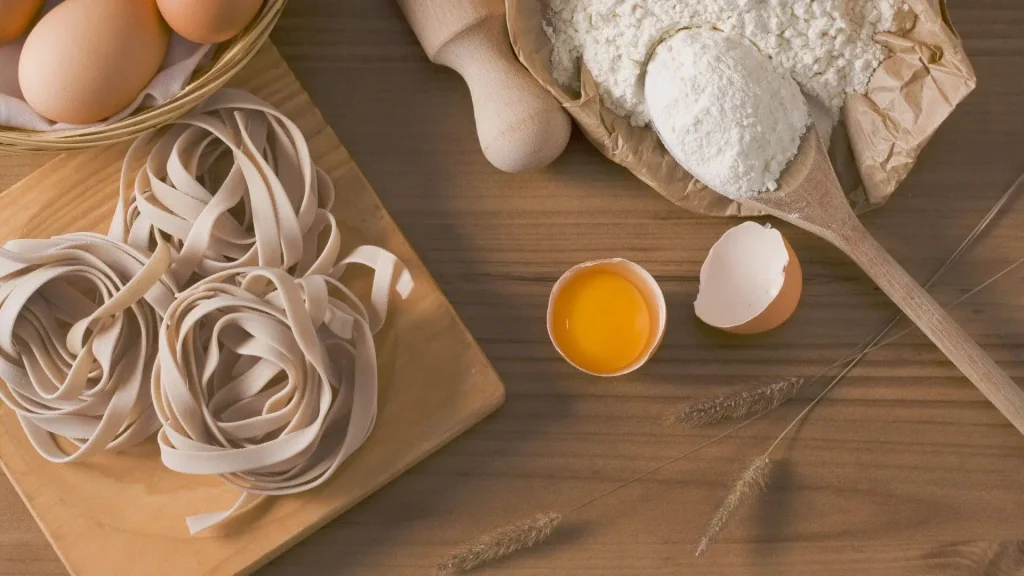
What if someone told you that Marco Polo never brought pasta from China to Europe? It’s a widely held theory, but the real history is much older and more surprising.
Even in ancient Rome, people ate lagana, a flour-based dough cooked in water, similar to lasagna. By the end of the ninth century, in the Maghreb, a thread-shaped pasta was made, the itriya, which was dried and exported across the Mediterranean.
That is why the spaghetti we eat seems to have Islamic origins. Even the word “fideo” comes from the Arabic fidaws.
Sources
-
Martínez-Moreno, F. et al. 2020. Durum Wheat in the Mediterranean Rim: Historical evolution and genetic resources. Genetic Resources and Crop Evolution, 67: 1415–1436.
-
Oubahli, M. 2006. A history of pasta in the western Mediterranean. Arabo-Berber pastas and their diffusion into Latin Europe in the Middle Ages. Horizons Maghrébins – The Right to Memory, 55: 48-72. DOI: https://doi.org/10.3406/horma.2006.2374
-
Shelke, Kantha. 2016. Pasta and noodles: a global history. Reaktion Books.