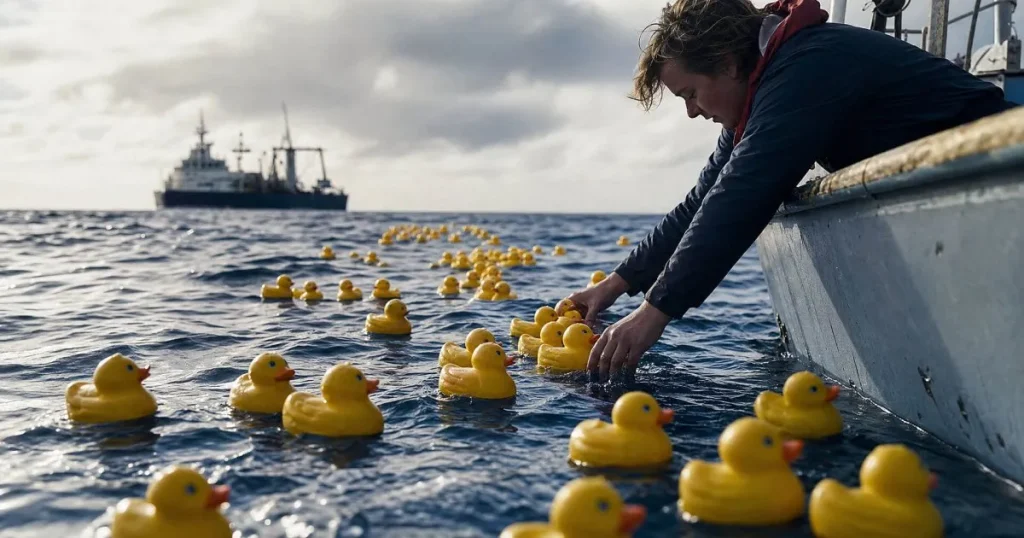
The story has circulated for decades: a storm, a lost cargo, and thousands of rubber bath toys drifting around the world until they wash up on distant shores. The image is so charming that almost everyone buys it as truth. But it starts with two mistakes. They weren’t only ducks, and no scientist managed to predict with certainty where each one would surface. What actually happened is, if anything, even more interesting.
A container overboard and an unplanned experiment
On January 10, 1992, in the open North Pacific, a container slid off the deck of the ship Ever Laurel, operated by Evergreen. Inside were 28,800 plastic bath toys. And here is the first important correction: they weren’t 28,800 ducks. The cargo was divided into four groups of 7,200 units each: ducks, turtles, frogs, and beaver figures.
That detail, often left out when the anecdote is recounted, matters more than it might seem. Ducks, turtles, frogs, and beavers don’t have the same shape or float in exactly the same way, and some poked farther out of the water than others. As we will see, those differences in exposure to the wind influenced how researchers later interpreted their movements.
The toys carried no GPS or any kind of tracking device. So, how was their journey reconstructed? The answer is surprisingly analog: from the places and dates where people found them and reported it. Each toy picked up on a beach became a data point, with an approximate position and timestamp.
Accidental tracers without batteries or antennas
In oceanography there is a classic technique for studying currents: release floating objects and watch where they go. People have used everything from bottled messages to instrumented buoys. The 1992 spill offered something similar, albeit unintentionally: nearly 29,000 identical objects, released at one point and on one date, that began to disperse across the ocean.
The first findings arrived in the southeastern part of Alaska, near Sitka, along 1992. The scientific paper that studied the case, Tub Toys Orbit the Pacific Subarctic Gyre (Ebbesmeyer and colleagues, Eos, 2007), places these initial toys in August and September of that year, at a distance of roughly 3,200 to 4,000 kilometers from the accident site. A note of caution is warranted: sources don’t completely agree on the exact chronology. For example, an earlier NOAA report places the first finds reported starting in November 1992, with more sightings during the summer of 1993.
In any case, the underlying idea is clear. The toys acted as accidental tracers of the surface circulation of the ocean: they didn’t measure anything themselves, but their appearances on different coasts over months and years sketched a trace that could be compared to what the models predicted.
What is the subarctic gyre and why does it complicate things?
The setting of this story is the North Pacific Subarctic Gyre, a large system of currents that circulates in a somewhat closed loop in that region of the ocean. A gyre like this can keep objects afloat for years, and more interestingly, it doesn’t move them along a single channel: different routes and the shifting action of the wind can separate objects that started from the same place.
This is where the model OSCURS (an English-language acronym for a system that simulates surface ocean currents) came into play. The researchers used it to reconstruct which trajectories were plausible from the spill’s point and date. OSCURS combined long-term mean currents with estimates of currents inferred from daily pressure data, calculated on a grid of about 90 kilometers. Importantly, it was tuned to reflect that these toys tended to protrude more from the water and were more exposed to the wind than other floating objects.
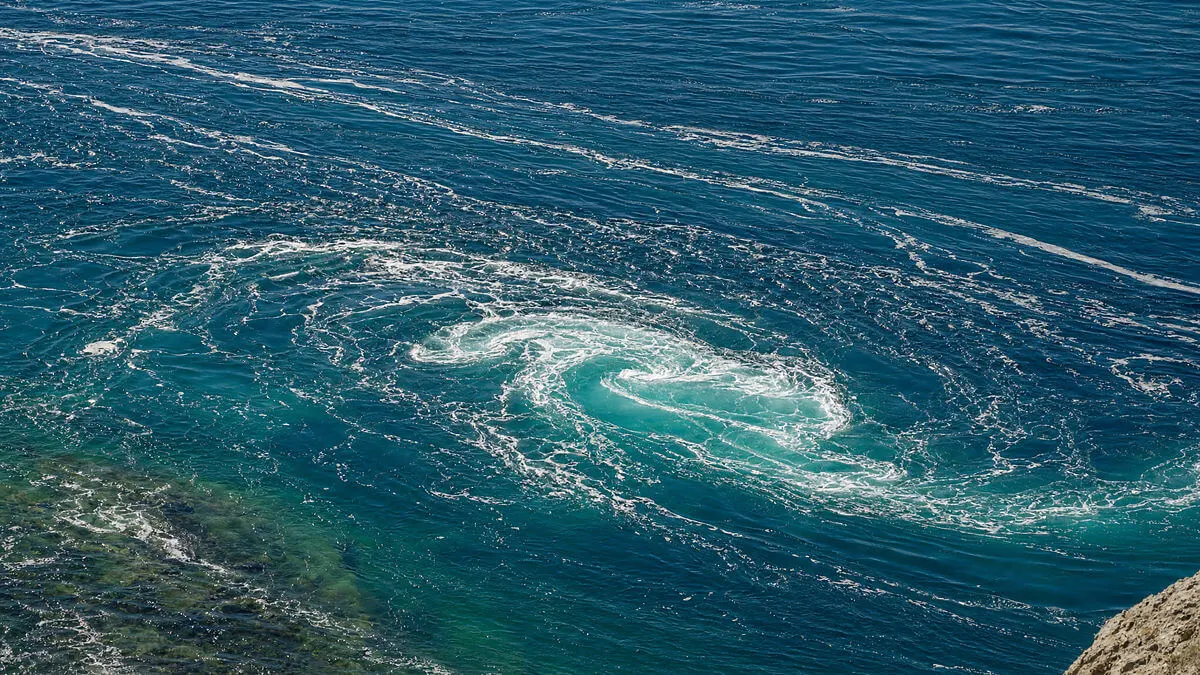
To explore the possible routes, the team released in the simulation 70 virtual objects from the crash site and tracked them for 11.5 years. The result was not a single straight line but a fan of trajectories: several possible loops around the gyre and some paths leaving the system. The study estimated orbital times of roughly 2.11-2.16 years, 2.72-2.80 years, and 3.30-3.63 years, depending on the route simulated.
What could be estimated and what could not
Here it helps to hold back from the mythic version of the tale. Those intervals describe possible journeys on a regional scale, not the travel time of any specific toy. And that distinction is the heart of the matter.
The spill allowed researchers to evaluate circulation models and estimate likely routes on a large scale. What it could not do was predict exactly where or when each of the 28,800 pieces would appear. It could not do so for several reasons: the initial conditions for each toy were unknown, its recovery depended on someone finding and reporting it, and many simply never surfaced again.
The scientific value, therefore, lay elsewhere. It helped move from an intuitive and false idea — that an object simply follows a current as if on a conveyor belt — to a more realistic description in which wind, drifting currents, coastlines, and divergent paths separate objects that began together. The toys, drifting for long periods, revealed patterns of circulation that are difficult to capture with more conventional observations.
And the famous flotilla of ducks in Scotland?
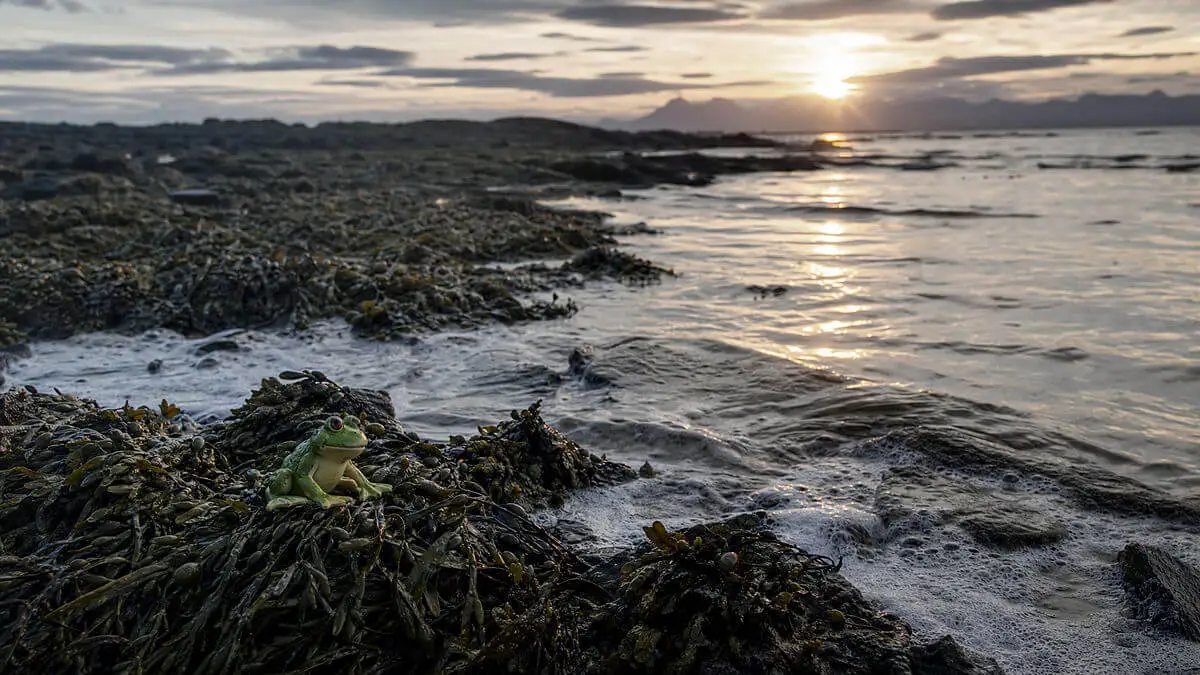
The popular version crowns the tale with thousands of ducks arriving together on the shores of Scotland. The available evidence paints a far more modest picture. Yes, there were far-reaching finds: one documented find was a frog from this cargo discovered on the Isle of Skye, Scotland, in August 2003, more than a decade after the accident.
But it was an isolated find, not the simultaneous arrival of a fleet of thousands of toys. And the route to the North Atlantic likely wasn’t a direct voyage from the Pacific: the most commonly considered hypothesis points to a complex journey through the Bering Strait and the Arctic ice transport. It is a plausible explanation, though it does not constitute a complete, verified reconstruction for every piece found outside the Pacific.
From toy to debris: the other side of the experiment
There is a somewhat awkward detail in this upbeat story. The same mechanisms that turned the toys into effective tracers of currents are the same ones that transport plastics and waste across vast ocean distances. What helps us understand surface circulation also makes it harder to pinpoint the origin of floating junk and plan its removal.
That is why the episode remains instructive decades later. Not because a handful of rubber toys foretold the future — they did not — but because it clearly shows how science works: models are built, tested against real observations, imperfect as they may be, and the understanding of the system is refined. The data, at bottom, are less about guessing the fate of each object than about estimating which routes are probable and which are unlikely. Next time someone sums up this story as “28,800 ducks arrived in Scotland,” you’ll know how many corrections such a simplification deserves.
The data, at bottom, are not so much about predicting the fate of each object as about estimating which routes are probable and which are unlikely.