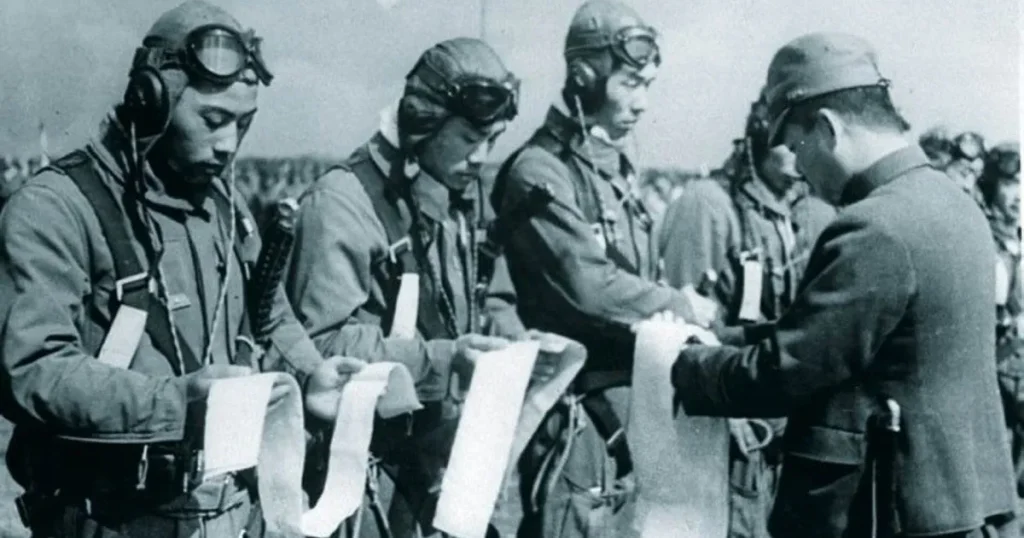
The hachimaki (from hachi, “forehead,” and maki, “band”) was part of the kamikaze ritual. During World War II, Japanese pilots placed a headband bearing the symbol of the Rising Sun on their foreheads. According to their beliefs, it protected them from evil spirits and infused them with the courage required to fulfill their missions.
However, this band was not exclusive to suicide pilots, despite the image that has been built around them. Nor were they the only ones who drank sake before starting their missions.
A Band to Face Challenges
Students, workers, and women also used—and continue to use—the hachimaki, usually made of red or white fabric. They wear it as a symbol of effort and perseverance, with the belief that it gives them the strength to overcome an exam, a task, or childbirth.

The band covers the forehead and typically displays a symbol or a word related to perseverance and the will to succeed of the wearer. Thus, the printed message expresses the wearer’s purpose: to persevere and face with determination whatever lies ahead. It is not merely an accessory, but a visible way of manifesting that attitude.
Concentration and Good Luck
Sometimes, this typically Japanese bandana has a more practical use: to prevent sweat from reaching the eyes during a sporting, intellectual, or creative effort. In Japan it is also said to aid concentration and to be a lucky charm. Additionally, it is used as a group identifier at popular celebrations.
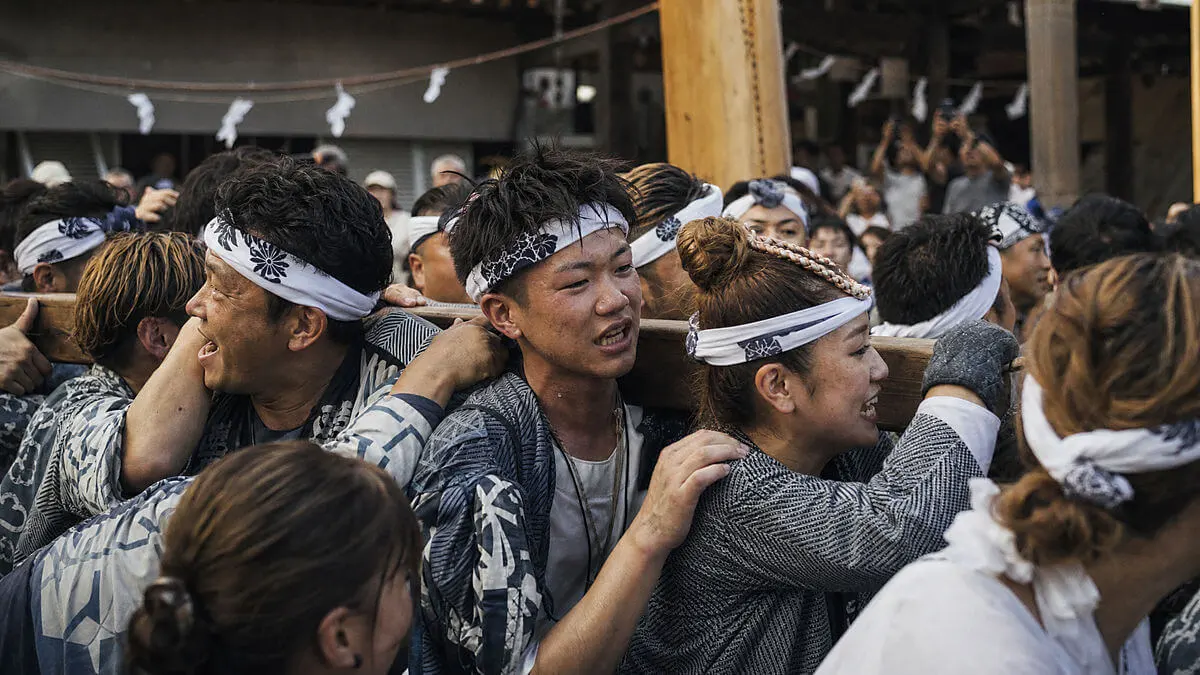
The hachimaki thus brings together different uses: it can be worn to express perseverance, to help keep sweat away from the eyes, or to identify the members of a group during a celebration. Its meaning depends on the context and on who wears it, but the band remains associated with effort and the will to overcome a challenge.
Its meaning depends on the context and on who wears it, but the band remains associated with effort and the will to overcome a challenge.