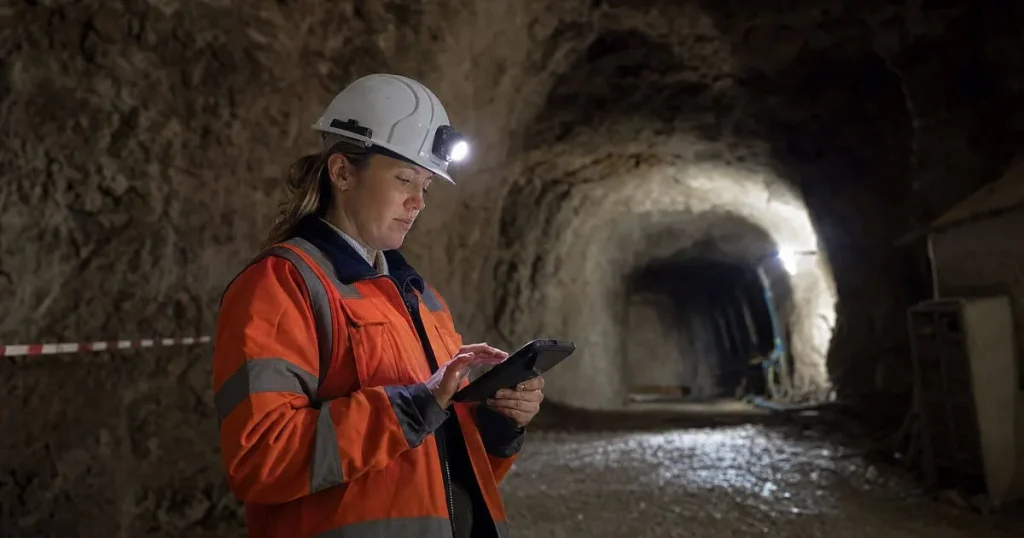
Imagine a female worker with complete training; she holds a certificate in heavy machinery operation and her medical evaluation is up to date. She meets all the technical requirements to work in mining. Yet, she is barred from going down into the mine gallery, not because she has failed any test, but because a regulation classifies her as unfit for that job.
That scene, more common than it seems, sums up a problem that archaeology, labor law, and occupational health are helping to rethink. How can we explain the exclusion of women from underground and mining work throughout history? Was the law meant to protect them or did it serve other functions?
How can the exclusion of women from underground and mining work be explained throughout history?
The law that barred women from going down into the mine
Between the 19th and 20th centuries, many countries enacted laws prohibiting or limiting women’s work inside mines. The official justification combined safety, physical exertion, morality, and reproductive protection. In the United States, for example, seventeen states outright prohibited in 1932 women from working underground, according to the historical legislative landscape compiled by NIOSH (National Institute for Occupational Safety and Health).
At first glance, those laws presented themselves as protective shields. Many of these laws (starting with Britain’s 1842 act) arose as a reaction to the real conditions of labor exploitation of women and children in 19th-century mines. However, by closing access to the mine they also closed access to higher wages, to technical training, to union membership, and to professional advancement.
The most representative case on the international stage is International Labour Organization Convention No. 45. Adopted in 1935, it established a general prohibition on women’s underground work with limited exceptions. The ILO itself eventually deemed it an outdated instrument, because its logic of exclusion by sex conflicted with the contemporary approach to equal treatment and risk prevention applicable to everyone.
Entre los siglos XIX y XX, numerosos países aprobaron normas que prohibían o limitaban el trabajo femenino en el interior de las minas.
2024: The year a historic prohibition was repealed
On June 6, 2024, during the 112th International Labour Conference, the ILO adopted the repeal of Convention No. 45. Although the decision does not wipe away every barrier in one stroke, it at least signals a shift in orientation: moving from gender-based exclusion to the prevention of concrete risks through technically justified standards.
The problem has not disappeared. According to the World Bank’s Women, Business and the Law 2024 report, a quarter of the 190 economies analyzed still maintained at least one legal restriction on the jobs women can perform in mining, some of them related to underground work.
In those cases where the law already allows access, women’s participation remains minority. In the United States, women represented roughly between 10% and 17% of the mining workforce according to 2021 figures cited by NIOSH. The gap between what the law permits and what reality shows suggests that barriers go beyond the legal realm and extend into material and cultural dimensions.
During the 112th International Labour Conference in 2024, the ILO adopted the repeal of Convention No. 45. This marks a shift: moving from exclusion by gender to the prevention of concrete risks.
Mining Work in Perspective: The Case of the Two Neolithic Sisters
The idea that mining has always been a male-only activity also wobbles when archaeology records are consulted. A study published in 2025 in Archaeological and Anthropological Sciences analyzed remains found in an ancient mine shaft in the silex-extraction region of the Krumlov forest in the Czech Republic.
The site contained three individuals: two adult women and a term newborn whose sex could not be determined. The adults, aged an estimated 30 to 40, had very short statures, around 148 cm. Their identification as women rested on pelvic morphology, morphological analysis using the DSP.V2 method, and genetic analyses, which also revealed that both were close relatives, most likely sisters. The newborn, however, was not related to them.
What matters is what the bones reveal. The authors documented osteological indicators compatible with intense and prolonged physical activity: highly marked muscle insertions, degenerative changes in the spine, osteophytes (abnormal bone growths), Schmorl’s nodes, hyperkyphosis, lumbar spondylolysis (a type of stress fracture in a vertebra), and a poorly consolidated fracture in the ulna of one individual. This fracture suggests the woman continued to work despite the injury.
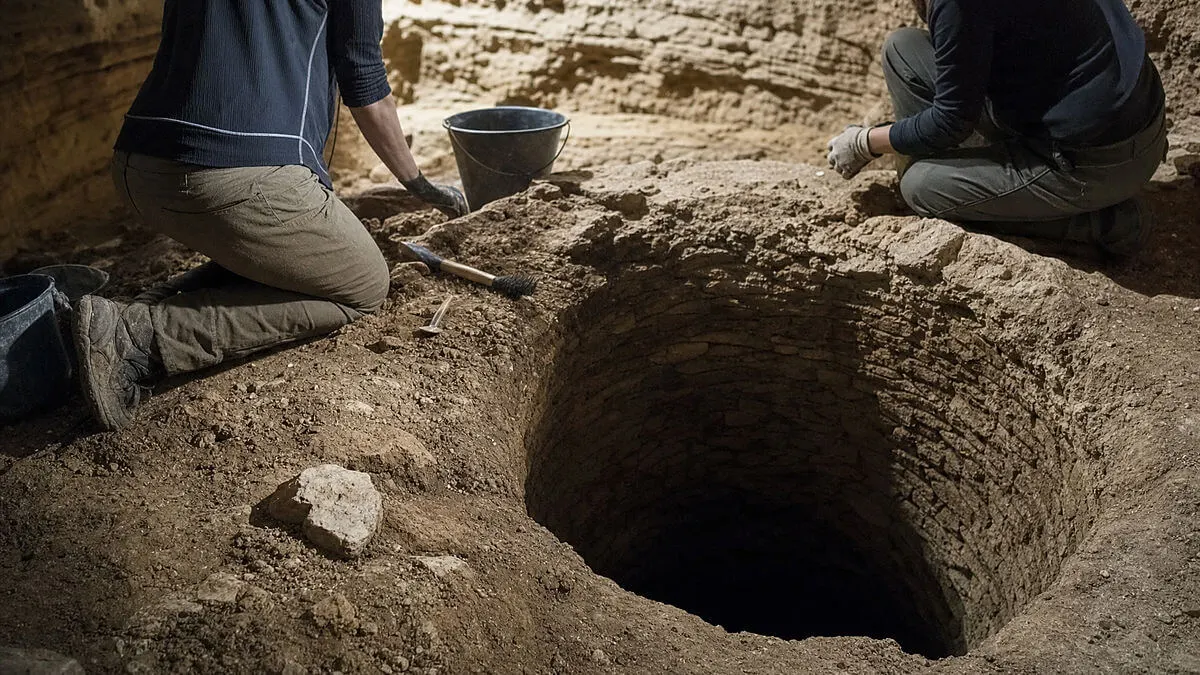
The evidence thus points to female participation in mineral extraction dating back about 6,000 years. It is likely, however, that these two women worked out of obligation in the mine. The degree of bodily deterioration suggests exploitation or coercion of people of low social status more than a normalized female participation in mining activity.
A Problematic Helmet: When Exclusion Begins in the Gear
Simply lifting the legal ban on working in the mine is not enough. Much of the machinery, personal protective equipment (PPE), uniform sizes, changing rooms, and certain emergency protocols were historically designed around a male reference worker.
A helmet that does not fit, a harness designed for a specific body profile, gloves that are too large, or a cabin with controls that are not easily accessible can increase risk even if the worker has the same training as colleagues. The barrier shifts from law to equipment, which is why it is harder to detect: no one signs a rule prohibiting access, but ill-fitting gear makes it difficult in practice.
Added to this is a knowledge gap. NIOSH notes that health and safety research in mining has predominantly studied male workers, leaving certain risks poorly characterized, such as PPE fit, musculoskeletal injuries, and specific respiratory exposures.
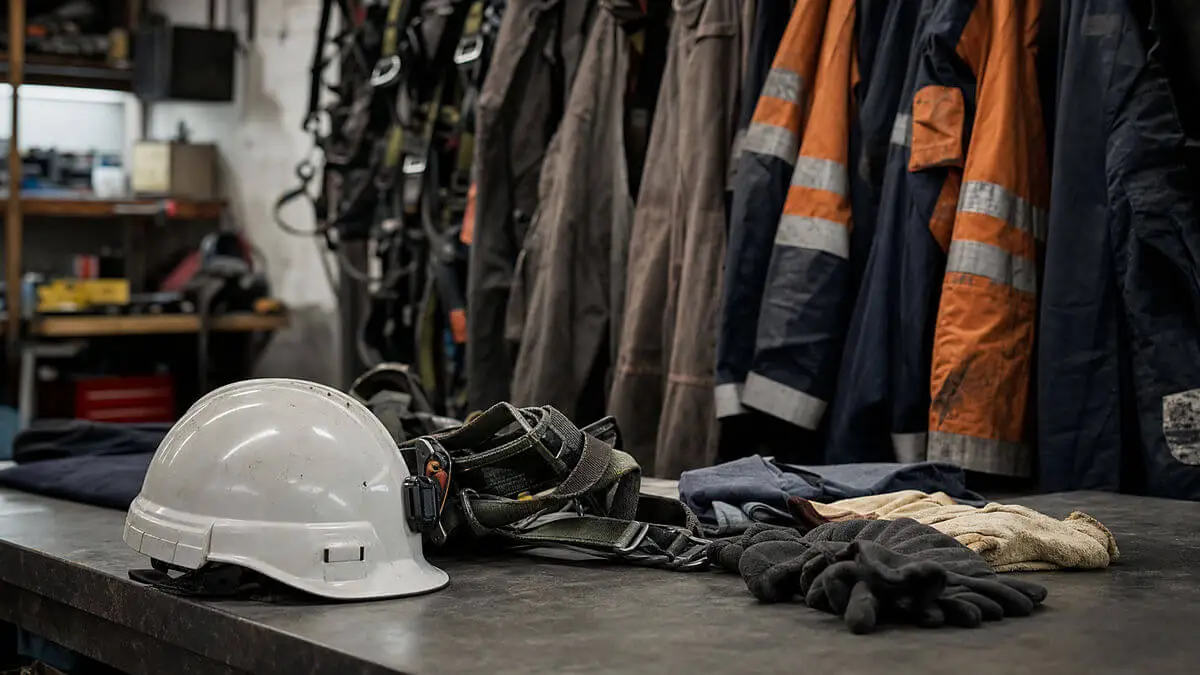
Much of the machinery, PPE, sizes of uniforms, changing rooms and certain emergency protocols were historically designed around a male reference worker.
Modernizing the Subsurface: From Label to Measurable Risk
How would a system look that replaces a blanket prohibition with real safety? The answer lies in combining individual competency assessment with universal risk controls that apply to the entire workforce. Technically, that means measuring and controlling the amount of dust in the air, ensuring proper ventilation, as well as protecting hearing from noise and implementing thermal control, rigorous maintenance of machinery, and evacuation procedures. These are quantifiable risks that can be measured in concentrations, decibels, degrees, or response times, without resorting to sex as a substitute for evaluation.
In terms of equipment design, the key is to ensure ergonomics and adaptability: PPE adjustable to different anatomies, accessible controls, mechanical aids to handle loads, suitable facilities and changing rooms. Added to this are practical training and clear protocols against harassment and retaliation, elements that guarantee a truly safe environment for any worker.